

Democrats won Virginia’s Senate race, flipped two House seats and gained control of Congress. The results are a warning to Republicans and a test of what Democrats do next.
Virginia’s 2026 election delivered a clear political result: voters chose Democratic Sen. Mark Warner for a fourth term, shifted two congressional seats to Democrats and approved three proposed amendments to the state constitution. Across the country, Democrats won control of both chambers of Congress, setting up a new balance of power for the final two years of President Donald Trump’s term. (Virginia results; national results)
News organizations have called the major races, but Virginia’s results remain unofficial until certification. The canvass and certification process can include additional ballots and review of reported totals. See the Virginia Department of Elections results page.
Virginia’s federal races
Warner defeated Republican Bert Mizusawa by a wide margin, winning about 60% of the vote. In the House, former congresswoman Elaine Luria defeated Republican incumbent Jen Kiggans in the 2nd District, while Democrat Shannon Taylor defeated longtime Republican incumbent Rob Wittman in the 1st. Republican John McGuire held the 5th District in a close race against former congressman Tom Perriello.
Those results leave Democrats with eight of Virginia’s 11 seats in the U.S. House, up from six. The flips in the 1st and 2nd Districts show that Republican incumbency offered no guarantee of safety, even in districts Republicans hoped to hold. (Virginia Mercury’s election coverage)
The congressional races were held under Virginia’s existing district map. A redistricting amendment approved by voters in April had been struck down by the Supreme Court of Virginia, so the proposed map was not used in November.
Three amendments approved
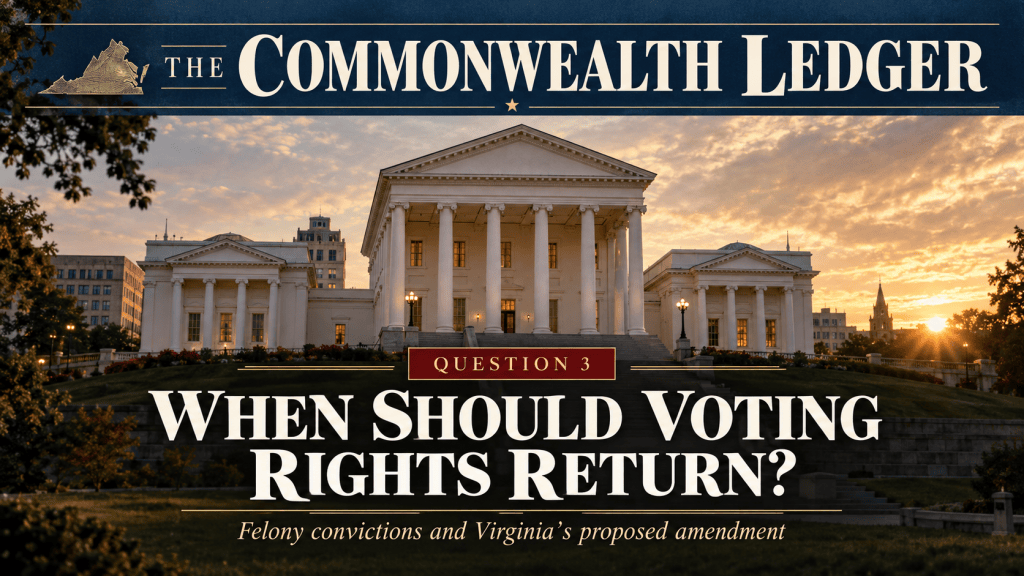
Virginia voters also approved amendments addressing reproductive freedom, marriage and voting rights. The reproductive-freedom amendment received about 62% support; the marriage amendment and the voting-rights amendment each received about 57%.
The reproductive-freedom amendment would protect specified decisions about prenatal care, childbirth, postpartum care, birth control, abortion, miscarriage management and fertility care. It also permits restrictions on abortion during the third trimester, with exceptions when the patient’s health is at risk or the pregnancy cannot survive. The marriage amendment would remove the state constitution’s ban on same-sex marriage and require equal treatment of lawful marriages. The voting-rights amendment would restore voting rights to people convicted of felonies upon release from incarceration. It also changes the standard for disqualifying someone from voting based on mental capacity. (official ballot language)
The results are still unofficial, and legal challenges to the reproductive-freedom and marriage amendments are pending. A hearing on the reproductive-freedom challenge is scheduled for Nov. 13. (Virginia Mercury)
A national rebuke—and a responsibility
Nationally, Democrats’ gains extended well beyond a narrow shift in control. They flipped at least seven Senate seats and more than two dozen House districts, including seats in traditionally Republican territory. The new majority can block legislation and nominations and investigate the administration. (Associated Press)
The results point to voter frustration with the direction of the country, including concern about the cost of living and a desire for Congress to provide stronger checks on the president. Those themes emerged in the Associated Press’ voter polling, though no single poll or election result explains why every voter cast a ballot as they did.
For Republicans, the warning is plain: voters who feel economic pressure and doubt that elected leaders are listening can turn against the party in power. The response cannot be limited to blaming candidates, campaigns or outside forces. Republicans will have to make a convincing case that their policies improve people’s daily lives and that they are prepared to govern with discipline.
Democrats have their own test. Winning control of Congress gives them the chance to set priorities and scrutinize the administration. It does not give them a blank check. Voters who demanded accountability will expect it to be exercised responsibly—and will judge Democrats by what they accomplish, not only by what they oppose.
In Virginia, the results are especially instructive. Warner’s victory, the House-seat gains and approval of all three amendments show voters making distinct choices across the same ballot. Republicans held important ground, including McGuire’s close win in the 5th District, but Democrats finished the night with a stronger congressional delegation and a decisive statewide Senate victory.
The 2026 election has changed the balance of power in Washington and, pending certification and the resolution of legal challenges, could reshape Virginia’s constitution. The next measure of its meaning will be what elected officials do with that power—and whether voters believe their lives are better for it.




Leave a Reply